
Steel supply chain availability can directly affect the schedule, cost, and execution of a storage-tank project. Steel plates, structural components, welding materials, and related items must arrive according to the fabrication plan. IESCON helps industrial project teams plan material requirements, procurement, fabrication, and tank execution to reduce avoidable delays caused by material shortages or long lead times.
How Can Steel Supply Chain Availability Delay a Storage Tank Project?
Storage tanks require large quantities of steel, and delays in critical materials can affect several activities at the same time.
A project may have approved drawings, prepared foundations, available labor, and construction equipment, but fabrication cannot progress if the required steel plates are unavailable.
The effect can move through the entire project schedule:
Material shortage → fabrication delay → erection delay → testing delay → commissioning delay → project handover delay
The impact is particularly significant when the missing material is associated with a critical shell course, bottom plate, roof component, or other long-lead item.
Example
Imagine a tank fabrication schedule that requires shell plates during the first month of production. If the material arrives four weeks late, the contractor may not simply lose four weeks of fabrication time.
The delay can also affect:
- Welding activities
- NDT
- Component assembly
- Transportation
- Site erection
- Crane mobilization
- Inspection
- Testing
- Commissioning
This is why steel supply chain planning should begin during project procurement rather than after fabrication starts.
Why Is Steel Supply Chain Availability Critical for Storage Tank Projects?
Steel is not a single procurement item. A storage tank project may require different grades, thicknesses, dimensions, and material specifications for different components.
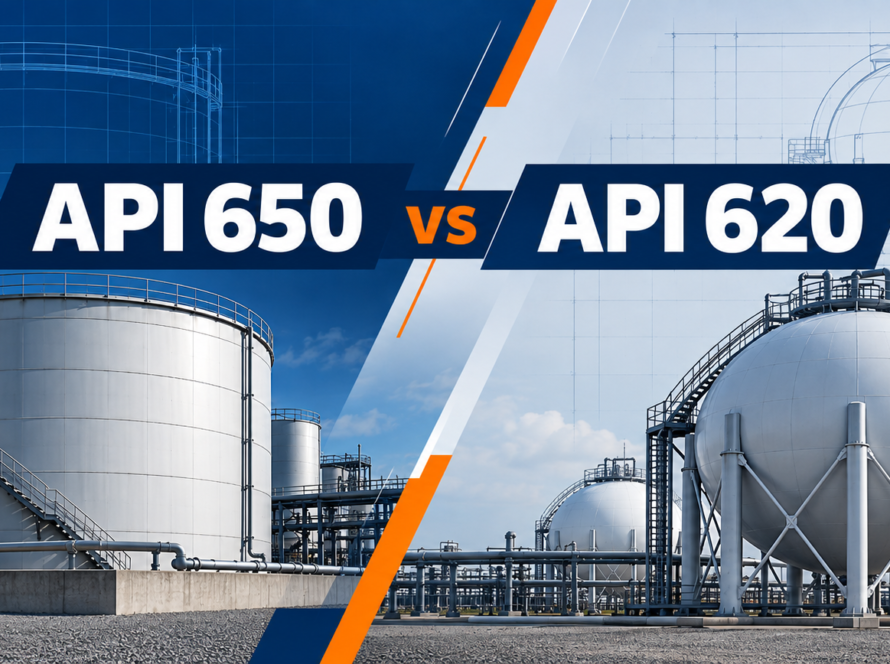
API 650 establishes minimum requirements for applicable vertical, cylindrical, aboveground welded storage tanks, including requirements related to materials, design, fabrication, erection, and inspection. The current API standards plan lists API 650, 14th Edition, published in August 2025.
This means material procurement cannot be based simply on availability or lowest price.
The purchasing team must confirm:
- Required material specification
- Grade
- Thickness
- Plate dimensions
- Quantity
- Impact-test requirements where applicable
- Heat treatment requirements where applicable
- Material certification
- Traceability
- Delivery schedule
- Inspection requirements
- Project approval requirements
Why Timing Matters
| Material Issue | Potential Project Effect |
| Steel plate shortage | Fabrication cannot start or continue |
| Incorrect material grade | Material rejection and replacement |
| Wrong thickness | Engineering and procurement rework |
| Missing certificates | Material cannot be released |
| Late delivery | Fabrication schedule shifts |
| Damaged plates | Additional inspection or replacement |
| Poor traceability | Quality acceptance problems |
| Import delay | Extended procurement lead time |
A reliable supply plan therefore needs both material availability and material compliance.
What Steel Materials Are Required for Storage Tank Construction?
The exact bill of materials depends on tank size, design, roof type, service, and project specifications.
Typical steel-related materials include:
1. Shell Plates
Shell plates form the cylindrical wall of the tank. Thickness can vary between shell courses according to the engineering design.
2. Bottom Plates
Bottom plates form the tank floor and require appropriate material, arrangement, welding, and inspection.
3. Roof Plates
Roof material depends on the selected roof configuration and engineering requirements.
4. Annular Plates
Large tanks may require annular plates around the bottom perimeter, subject to the applicable design requirements.
5. Structural Steel
Structural components may include:
- Roof support structures
- Columns
- Platforms
- Stairways
- Walkways
- Ladders
- Handrails
6. Nozzles and Reinforcement Components
Tank nozzles and reinforcing components may require specific materials and dimensions.
7. Welding Consumables
Electrodes, wires, fluxes, and other welding consumables also require procurement planning and appropriate control.
Material Planning Table
| Material | Main Use | Procurement Priority |
| Shell plates | Tank wall | Very High |
| Bottom plates | Tank floor | High |
| Roof plates | Tank roof | High |
| Annular plates | Bottom perimeter | High |
| Structural steel | Roof/access systems | Medium–High |
| Nozzle materials | Connections | High |
| Welding consumables | Fabrication | High |
| Bolting and accessories | Assembly | Medium |
The material list should be developed from the approved engineering documents rather than estimated from previous projects.
Common Steel Supply Chain Risks in Storage Tank Projects
Several risks can affect steel procurement.
Long Lead Times
Specialized materials may require longer manufacturing and delivery periods than standard products.
Limited Availability
A required grade, thickness, or dimension may not be immediately available from an approved source.
Price Volatility
Steel prices can change during the period between quotation, purchase order, manufacturing, and delivery.
Transportation Delays
Even when the steel has been produced, transportation, customs, port procedures, or inland logistics can affect the project schedule.
Quality Rejection
Materials can be delayed if inspection identifies problems with dimensions, surface condition, documentation, or material certification.
Documentation Problems
Missing or inconsistent material certificates can prevent the material from being released for fabrication.
Engineering Changes
A late design change can make already-purchased steel unsuitable for the revised configuration.
The best response is not to eliminate every risk. It is to identify critical risks early and establish practical alternatives.
How Material Shortages Affect Project Cost and Schedule
A steel shortage can create both direct and indirect costs.
Direct Costs
- Expedited transportation
- Emergency purchasing
- Material replacement
- Additional inspection
- Storage changes
- Supplier cancellation or modification costs
Indirect Costs
- Idle fabrication labor
- Equipment downtime
- Delayed crane mobilization
- Extended project management
- Additional site overhead
- Delayed commissioning
- Potential contractual impacts
For example, replacing a delayed material with an available material may appear simple, but an alternative material cannot automatically be substituted.
The engineering team may need to review the proposed alternative for compliance with the applicable design basis and project requirements.
How to Assess Steel Availability Before Starting a Tank Project
A strong procurement strategy starts with a Material Availability Assessment.
Step 1: Freeze the Critical Material List
Identify the materials that can stop fabrication if they are unavailable.
Step 2: Define Exact Specifications
Record:
- Grade
- Thickness
- Width
- Length
- Quantity
- Required certification
- Applicable standard
- Delivery location
Step 3: Classify Materials by Lead Time
Create three categories:
Short lead: readily available standard materials.
Medium lead: materials requiring production or additional processing.
Long lead: specialized or limited-availability materials requiring early procurement.
Step 4: Check Supplier Capacity
Do not ask only whether a supplier “has steel.”
Confirm:
- Actual stock
- Production capacity
- Manufacturing schedule
- Delivery commitment
- Certification availability
- Inspection arrangements
Step 5: Create a Procurement Buffer
The required buffer should reflect the project’s risk profile rather than using an arbitrary number of days.
Step 6: Link Procurement to the Construction Schedule
The procurement schedule should show when each material is needed—not simply when the purchase order is issued.
Alternative Sourcing Strategies for Steel Materials
When the preferred material source becomes unavailable, project teams can consider several strategies.
Approved Alternative Suppliers
Prequalify more than one suitable source where the project specifications permit it.
Early Procurement
Purchase critical materials before fabrication becomes dependent on them.
Framework or Blanket Purchasing
For projects involving multiple tanks, planned purchasing can help coordinate material requirements.
Local Stock Availability
Where technically acceptable, locally available materials can reduce transportation and delivery uncertainty.
Partial Procurement
Instead of waiting for the complete material package, purchase critical items first.
Controlled Material Substitution
If a proposed alternative material is technically different, obtain the required engineering review and approval before use.
A supplier should never be changed simply because another material is cheaper or immediately available.
Local vs Imported Steel for Storage Tank Projects
Both local and imported materials can have a place in a tank project’s procurement strategy.
| Factor | Local Steel | Imported Steel |
| Delivery distance | Usually shorter | Usually longer |
| Transportation complexity | Lower in many cases | Higher |
| Customs exposure | Generally lower | Higher |
| Availability | Depends on grade/specification | May provide broader sourcing options |
| Lead-time predictability | Depends on production capacity | Can be affected by international logistics |
| Documentation | Must meet project requirements | Must meet project and applicable standards |
| Cost | May reduce logistics costs | May be competitive depending on specification and market |
| Flexibility | Useful for available standard materials | Useful for specialized requirements |
The decision should be based on technical compliance, availability, lead time, total landed cost, quality documentation, and project risk.
The cheapest material price does not necessarily represent the lowest project cost.
How to Manage Steel Procurement and Lead Times
A procurement schedule should be directly connected to engineering and fabrication.
Recommended Procurement Sequence
Engineering → Material Take-Off → Technical Specification → Supplier Qualification → RFQ → Technical Evaluation → Commercial Evaluation → Purchase Order → Manufacturing → Inspection → Delivery → Receiving Inspection → Fabrication Release
Each stage should have a clear owner and planned completion date.
Procurement Tracking Example
| Item | Required Date | Supplier Status | Inspection | Delivery Status |
| Shell plates | Week 8 | Manufacturing | Planned | On schedule |
| Bottom plates | Week 6 | Ready | Completed | In transit |
| Roof plates | Week 12 | Ordered | Pending | Monitoring |
| Structural steel | Week 10 | Available | Completed | Delivered |
| Welding consumables | Week 4 | Available | Completed | Delivered |
This type of tracking helps the project team identify a problem before it becomes a construction delay.
How to Reduce Storage Tank Project Delays Caused by Steel Supply Issues
The most effective strategy is proactive planning.
1. Identify Long-Lead Materials Early
Do this before finalizing the procurement schedule.
2. Maintain Approved Supplier Options
Where project requirements allow, establish qualified alternatives.
3. Track Material Against the Construction Schedule
Procurement should know exactly when fabrication needs each material.
4. Inspect Materials Before Shipping
Early inspection can identify problems before materials reach the project site.
5. Maintain Material Traceability
Every received item should be linked to its documentation and intended application.
6. Establish Escalation Rules
If a supplier misses a milestone, define when the procurement team must escalate the issue.
7. Keep Engineering and Procurement Connected
Engineering changes should immediately trigger a review of affected purchase orders and material requirements.
8. Prepare Contingency Options
For critical materials, document possible alternative suppliers, delivery routes, or approved solutions before a shortage occurs.
Steel Supply Chain Risk Management Checklist for Tank Projects
Engineering
- Approved material specifications available
- Material take-off completed
- Critical materials identified
- Long-lead materials identified
- Design changes controlled
Procurement
- Suppliers technically evaluated
- Material availability confirmed
- Delivery dates documented
- Material certificates required
- Inspection requirements defined
- Alternative sourcing options identified
Logistics
- Transportation plan prepared
- Import requirements reviewed where applicable
- Delivery route confirmed
- Storage area prepared
- Receiving inspection planned
Quality
- Material certificates received
- Heat numbers verified
- Dimensions checked
- Surface condition inspected
- Traceability maintained
Project Control
- Procurement schedule integrated with construction schedule
- Supplier milestones tracked
- Delays escalated early
- Contingency actions defined
- Material status reported regularly
FAQs About Steel Supply Chain and Storage Tank Projects
1. Why is steel supply chain availability important for storage tanks?
Storage tanks require large quantities of specified steel materials. If critical plates or components are unavailable, fabrication may stop and delay erection, inspection, testing, commissioning, and final handover.
2. What steel materials are commonly required for storage tank construction?
Typical materials include shell plates, bottom plates, roof plates, annular plates, structural steel, nozzle components, reinforcement materials, and welding consumables.
3. Should storage tank projects use local or imported steel?
The decision depends on technical specifications, availability, lead time, certification, logistics, total cost, and project requirements. Neither sourcing route should be selected based on price alone.
4. How can a tank project reduce steel procurement delays?
Identify long-lead materials early, confirm supplier capacity, prequalify suitable sources, integrate procurement with the construction schedule, track supplier milestones, and prepare contingency sourcing options.
5. Can an alternative steel material be used if the specified material is unavailable?
Potentially, but substitution should not be made solely because another material is available. The proposed material must be technically reviewed and approved according to the applicable design, standards, and project requirements.
Conclusion
A reliable steel supply chain is an important part of successful storage-tank execution. Material shortages, long lead times, documentation issues, and logistics problems can affect fabrication and the entire project schedule. IESCON helps project teams coordinate material planning, procurement, fabrication, tank erection, and quality requirements to reduce avoidable supply-related delays.
Plan Your Storage Tank Project Before Steel Delays Start
Don’t wait for a material shortage to affect your fabrication schedule.
Contact IESCON to discuss your storage-tank project, material requirements, procurement planning, fabrication, and execution strategy—and build a supply plan aligned with your project schedule.