



Heavy metal steel fabrication plays an important role in producing large industrial structures, equipment frames, storage tanks, and pressure-related components. For projects involving oversized components, IESCON emphasizes the importance of material verification, engineering accuracy, controlled welding, and documented inspection. Understanding these requirements helps project owners reduce rework, manage fabrication risks, and prepare components for safe installation and reliable service.
What Is Heavy Metal Steel Fabrication?
Heavy metal steel fabrication is the process of converting steel plates, beams, sections, and other metal products into large or heavy-duty industrial components. It involves cutting, forming, machining, fit-up, welding, inspection, and finishing according to approved engineering drawings and project specifications.
Typical applications include:
- Large industrial support structures and equipment skids.
- Storage tanks and associated steel components.
- Pressure vessels and process equipment, where applicable codes govern the work.
- Heavy-duty frames, platforms, and structural assemblies.
- Industrial modules, pipe supports, and fabricated steel sections.
The term heavy metal steel is not a formal engineering classification by itself. In industrial projects, heavy steel fabrication and heavy metal fabrication are generally more precise terms for describing this type of work.
What Are the Main Challenges in Fabricating Oversized Industrial Components?
Oversized components introduce technical and logistical challenges that require planning before fabrication begins.
- Dimensional control: Large plates and assemblies can distort during cutting, forming, and welding. Fabricators need defined measurement points, suitable fixtures, and inspection at critical stages.
- Welding distortion: Heat input and weld sequence can cause shrinkage, angular distortion, or changes in alignment. Appropriate joint preparation, welding procedures, and controlled sequencing help manage these effects.
- Material traceability: Using the wrong grade, thickness, or heat of steel can lead to rejection or performance problems. Material identification must remain traceable throughout production.
- Handling and lifting: Large components may require engineered lifting arrangements, suitable cranes, and carefully planned movement routes.
- Transport restrictions: Component dimensions, weight, road access, permits, and delivery sequence can affect the fabrication method and project schedule.
- Inspection access: Some welds and internal surfaces become difficult to inspect after assembly. Inspection hold points should therefore be planned before access is restricted.
The best approach is to identify these challenges during engineering and fabrication planning, rather than waiting until final inspection or site installation.
What Material Specifications Should Be Checked Before Fabrication?
Material selection must reflect the design conditions, service environment, applicable code, and approved purchase specification.
Before fabrication, verify the following:
| Material requirement | What to check | Why it matters |
| Material grade | Grade and specification stated in approved documents | Confirms the material meets design requirements |
| Thickness and dimensions | Nominal thickness, tolerances, and plate or section sizes | Supports fit-up and structural requirements |
| Mechanical properties | Required yield strength, tensile strength, and other specified properties | Confirms suitability for the intended load |
| Chemical composition | Required limits and material test documentation | Supports material verification and weldability assessment |
| Material certificates | Mill test certificates and applicable inspection records | Establishes traceability and compliance |
| Service conditions | Temperature, corrosion exposure, pressure, and loading | Influences material suitability |
| Weldability | Carbon equivalent or other specified checks, when applicable | Helps determine suitable welding controls |
Material certificates should be reviewed against the purchase order and applicable specification. Where required, positive material identification (PMI), additional testing, or verification of heat numbers may be included in the inspection plan.
Practical example:
If a fabricated vessel shell requires a specified material grade and thickness, a visually similar plate is not an acceptable substitute simply because it fits the drawing. Any proposed substitution should be technically reviewed and formally approved before use.
How Do Design Drawings and Engineering Requirements Affect Fabrication?
Approved drawings translate the design intent into measurable fabrication requirements. Incomplete or conflicting information can cause incorrect cutting, unnecessary weld repairs, dimensional errors, and delays.
Before work starts, confirm that the fabrication package includes:
- Approved general arrangement and detail drawings.
- Material grades, thicknesses, and identification requirements.
- Dimensions, tolerances, elevations, and datum references.
- Weld symbols, joint details, and specified weld sizes.
- Applicable codes, project specifications, and inspection requirements.
- Lifting points, temporary supports, and handling restrictions where required.
- Required surface preparation, coating, and final documentation.
A documented review should resolve discrepancies between drawings, specifications, and site conditions before cutting or welding begins. Revisions must be controlled so that workshop personnel use the latest approved documents.
For complex assemblies, a dimensional inspection plan can identify critical interfaces, such as nozzle locations, bolt holes, equipment mounting points, and connections to existing structures.
What Fabrication Processes Are Required for Heavy Steel Components?
The required processes depend on component geometry, material, service conditions, and design requirements. A typical workflow includes the following stages:
- Material receiving: Check certificates, dimensions, condition, identification, and traceability.
- Marking and cutting: Transfer approved dimensions to the material and cut using suitable equipment.
- Forming and machining: Roll, bend, bevel, drill, or machine components to the required geometry.
- Fit-up and alignment: Position components, verify joint preparation, and check dimensions before welding.
- Welding: Apply approved welding procedures using qualified personnel where required by the governing code or specification.
- Dimensional inspection: Measure alignment, roundness, straightness, and critical interfaces at specified stages.
- Weld inspection and NDT: Complete visual inspection and the specified nondestructive examination.
- Final verification: Resolve nonconformities, confirm acceptance, and compile required records.
- Surface treatment and dispatch: Apply specified coating or protection and prepare the component for safe transport.
Not every component requires every process. The fabrication sequence should be tailored to the approved design, inspection requirements, and intended installation method.
How to Ensure Dimensional Accuracy and Structural Integrity
Dimensional accuracy and structural integrity require controls throughout production, not just a final measurement.
Recommended controls include:
- Establish fixed datum points and approved tolerances before fabrication.
- Inspect incoming material before cutting.
- Use suitable jigs, fixtures, strong backs, and temporary supports where appropriate.
- Verify fit-up before welding.
- Follow the approved weld sequence and distortion-control method.
- Measure critical dimensions at defined inspection stages.
- Record deviations and obtain approval for any required engineering disposition.
- Complete the specified weld examinations and final dimensional checks.
| Control method | Main purpose | Typical application |
| Dimensional survey | Checks size, position, and alignment | Large frames, modules, and assemblies |
| Straightness or flatness checks | Identifies distortion | Plates, beams, and base frames |
| Roundness measurement | Verifies shell geometry | Cylindrical tanks and vessel sections |
| Fit-up inspection | Confirms joint preparation and alignment | Welded joints before welding |
| Weld inspection and NDT | Evaluates weld quality against acceptance criteria | Welded structural and pressure-containing components |
Illustrative example: A large fabricated frame may meet its overall length and width requirements but still have mounting holes out of position. Checking critical interfaces during fabrication can identify this problem before coating and dispatch, when correction may be more difficult and expensive.
Dimensional acceptance limits must come from the approved drawings, specifications, and applicable code—not from a universal tolerance assumed to fit every project.
What Welding, Inspection, and Quality Control Requirements Apply?
Welding quality is a critical consideration in heavy metal steel fabrication because defects, distortion, or incomplete documentation can affect structural performance, acceptance, and delivery.
A project quality plan should define the required welding procedures, personnel qualifications, inspection stages, acceptance criteria, and documentation. Applicable requirements depend on whether the component is structural steel, a storage tank, a pressure vessel, or another industrial assembly.
Welding procedure and personnel qualification
Before production welding, verify the applicable Welding Procedure Specification (WPS), supporting Procedure Qualification Record (PQR) where required, and welder qualifications. The governing code and project specification determine which qualifications and records are necessary.
For structural steel, AWS D1.1 may apply when specified. Pressure vessels may be governed by the applicable ASME Boiler and Pressure Vessel Code requirements. These standards are not interchangeable; the project documents determine the correct requirements.
Inspection and Test Plan (ITP)
The Inspection and Test Plan (ITP) defines what will be inspected, when inspections occur, who is responsible, and what evidence is required for acceptance. It should be agreed upon by the owner and contractor, with any required consultant or third-party involvement.
An ITP commonly identifies:
- Material receiving and traceability checks.
- Joint preparation and fit-up inspections.
- Welding procedure and welder qualification verification.
- Visual testing (VT) and specified nondestructive testing (NDT).
- Dimensional inspections and applicable pressure or leak tests.
- Final documentation review and release for dispatch.
How should NDT percentages be agreed?
The required NDT methods and examination percentages must be established from the governing code, design conditions, project specification, weld category, and owner requirements.
For example, an ITP might specify 30% liquid penetrant testing (PT) for designated welds and 10% ultrasonic testing (UT) for a defined weld population, if those requirements have been technically reviewed and approved for that project. These figures are illustrative, not universal recommendations.
The plan should clarify whether percentages apply to weld length, number of welds, joints, or another defined basis. It should also identify sampling rules, examination locations, acceptance criteria, reporting requirements, and the process for expanding inspection if unacceptable indications are found.
| Inspection method | What it can help detect | Important consideration |
| Visual testing (VT) | Visible surface imperfections, weld profile issues, and some dimensional problems | Usually performed at defined stages |
| Liquid penetrant testing (PT) | Surface-breaking discontinuities in suitable nonporous materials | Requires proper surface preparation |
| Magnetic particle testing (MT) | Surface and near-surface discontinuities in suitable ferromagnetic materials | Not suitable for every material |
| Ultrasonic testing (UT) | Internal discontinuities using suitable ultrasonic techniques | Technique and geometry affect suitability |
| Radiographic testing (RT) | Internal discontinuities that produce detectable radiographic contrast | Requires radiation controls and appropriate access |
The selected method must be suitable for the material, joint geometry, thickness, and expected discontinuity type. NDT results should be evaluated against the applicable acceptance criteria by qualified personnel.
Quality control principle: Inspection percentages should never be selected solely to reduce cost. They must satisfy the project’s technical and contractual requirements.
What Equipment and Facilities Are Needed for Heavy Steel Fabrication?
The equipment required depends on component dimensions, maximum lifting weight, material thickness, production volume, and the processes involved.
A suitable facility may require:
- CNC cutting equipment, plasma cutting, or other appropriate cutting systems.
- Plate rolling, press brakes, and forming equipment.
- Welding machines and controlled welding consumables storage.
- Positioners, turning rolls, fixtures, and assembly beds.
- Overhead cranes, mobile cranes, and approved lifting accessories.
- Measuring instruments and suitable dimensional inspection tools.
- NDT access, qualified inspection personnel, and testing arrangements.
- Surface preparation and coating facilities where specified.
When assessing a fabrication facility, ask for its maximum practical component dimensions, lifting capacity, workshop layout, inspection capabilities, and ability to handle the project’s materials and documentation requirements.
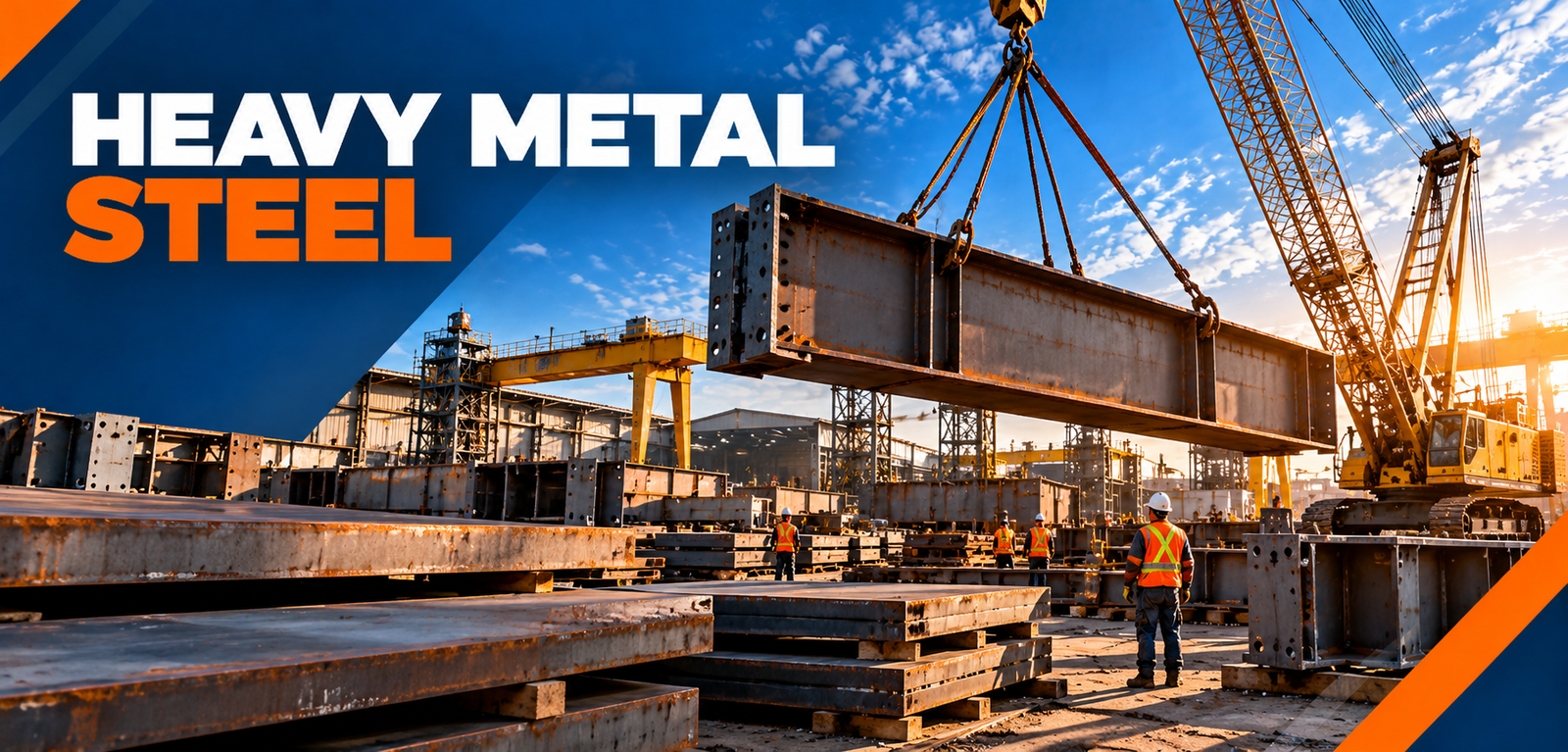
A large workshop alone does not guarantee quality. Equipment suitability, maintenance, personnel competence, process control, and traceability are equally important.
How Should Oversized Components Be Handled and Transported?
Handling and transportation should be planned during engineering, not after fabrication is complete. A component that is successfully fabricated may still face delays if it cannot be safely lifted, loaded, routed, or delivered to the installation location.
Use the following planning sequence:
- Confirm the component’s final dimensions, weight, and center of gravity.
- Identify approved lifting points and any restrictions on lifting orientation.
- Prepare a lifting plan with suitable cranes, rigging, and qualified personnel.
- Verify ground conditions, clearances, access routes, and loading arrangements.
- Check road limits, permits, escort requirements, and route restrictions where applicable.
- Protect machined surfaces, flange faces, coatings, and other vulnerable areas.
- Secure the load using an approved transport arrangement.
- Confirm receiving arrangements and the installation sequence before dispatch.
Oversized loads may require special transport vehicles, route surveys, and permits depending on the jurisdiction. Lifting and transport arrangements must be reviewed by competent personnel and comply with applicable safety requirements.
How to Select a Heavy Steel Fabrication Contractor
Selecting a contractor requires more than comparing quotations. The contractor must demonstrate that it can meet the technical, quality, capacity, safety, and delivery requirements of the actual project.
Evaluate these areas before award:
- Relevant technical capability: Confirm experience with comparable component types, dimensions, materials, and fabrication processes.
- Engineering and drawing control: Verify the process for reviewing drawings, managing revisions, and resolving technical queries.
- Welding competence: Request applicable WPS, PQR, welder qualification records, and evidence of compliance with the governing code.
- Quality assurance: Review the proposed ITP, inspection procedures, NDT arrangements, calibration records, and nonconformance management process.
- Workshop capacity: Check lifting limits, fabrication space, equipment availability, and the ability to accommodate the required production sequence.
- Traceability and documentation: Confirm that material certificates, inspection reports, weld maps where required, and final records will be maintained.
- Logistics and delivery: Review handling arrangements, transport planning, schedule assumptions, and coordination with site installation.
- Commercial clarity: Make sure the quotation defines the scope, exclusions, inspection responsibilities, documentation deliverables, and change-control process.
A useful comparison is to assess two quotations against the same approved scope. A lower price may exclude NDT, special handling, coating, or final documentation. A technically complete quotation makes these inclusions and exclusions explicit, allowing a more reliable comparison.
IESCON can be contacted to discuss industrial fabrication requirements, including the relevant scope, drawings, inspection expectations, and project-specific needs.
Heavy Metal Steel Fabrication Inspection Checklist
Use this checklist during contractor evaluation, fabrication planning, and quality reviews.
| Checkpoint | Verification question |
| Engineering | Are the latest approved drawings and specifications available? |
| Materials | Are grades, dimensions, certificates, and traceability verified? |
| Preparation | Have cutting, beveling, forming, and fit-up requirements been checked? |
| Welding | Are applicable procedures and personnel qualifications valid? |
| ITP | Have inspection stages, responsibilities, hold points, and acceptance criteria been agreed? |
| NDT | Are methods, examination percentages, coverage basis, and reporting requirements documented? |
| Dimensions | Have critical dimensions and interfaces been inspected against approved tolerances? |
| Nonconformities | Are deviations recorded and resolved through an approved process? |
| Final inspection | Are all required examinations and tests accepted? |
| Documentation | Are material, welding, NDT, dimensional, and final inspection records complete as applicable? |
| Dispatch | Are lifting, protection, transport, and receiving arrangements confirmed? |
The checklist should be adapted to the component type and project specification. Not every item applies to every fabrication scope, and the checklist does not replace the governing code or approved ITP.
FAQs About Heavy Metal Steel Fabrication
1. What is heavy metal steel fabrication used for?
It is used to manufacture large industrial steel components, including support frames, equipment skids, structural assemblies, tank components, and other fabricated items designed for demanding industrial applications.
2. What documents should be reviewed before heavy steel fabrication begins?
Review approved drawings, material specifications, material certificates, applicable welding procedures, qualification records, the ITP, inspection criteria, and any required manufacturing or testing documentation.
3. What percentage of welds should undergo NDT?
There is no single percentage for every project. The required methods and examination extent depend on the applicable code, weld type, service conditions, project specification, and the owner-approved ITP.
4. How can dimensional distortion be reduced during fabrication?
Use suitable fixtures, controlled fit-up, an approved welding sequence, appropriate heat-input controls, and staged dimensional inspections. The specific measures should reflect the material, component geometry, and design requirements.
5. What should I look for when selecting a heavy steel fabrication contractor?
Check relevant technical experience, workshop capacity, welding qualifications, inspection capabilities, traceability systems, NDT arrangements, safety procedures, documentation quality, and the ability to meet the required delivery schedule.
Conclusion
Successful heavy metal steel fabrication depends on verified materials, accurate engineering, controlled welding, and documented inspection. For oversized industrial components, an agreed ITP is essential for defining examination requirements, including NDT methods and percentages. IESCON can help project teams discuss their fabrication scope and quality expectations before work begins.
Planning a heavy steel fabrication project?
Contact IESCON to discuss your industrial fabrication requirements, engineering drawings, welding scope, inspection plan, and documentation needs. Share your project specifications to start a focused technical discussion and identify the next steps toward fabrication and delivery.