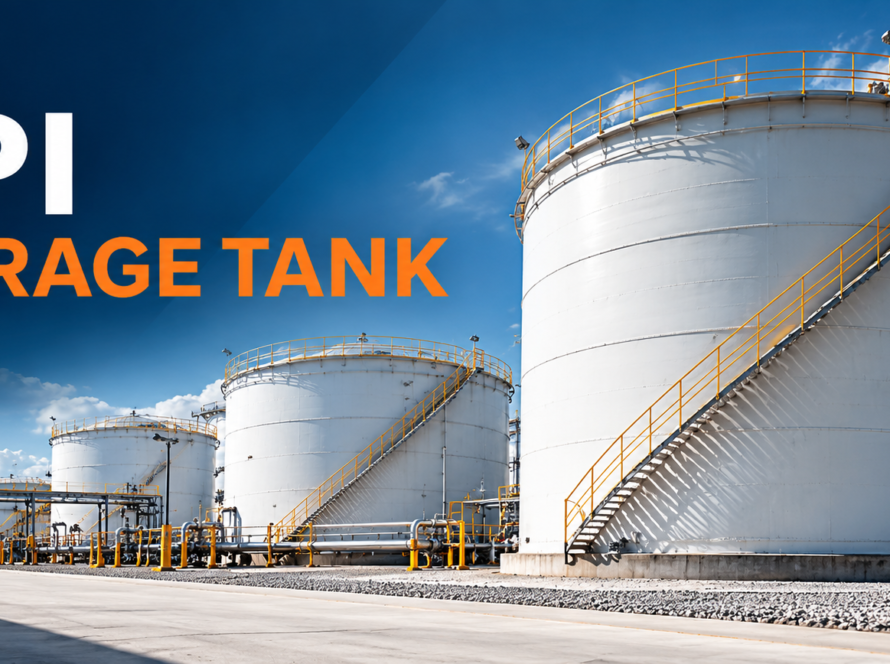


Choosing between carbon steel and stainless steel is a critical step in pressure vessel engineering. Carbon Steel vs Stainless Steel selection depends on process conditions, corrosion resistance, operating temperature, fabrication requirements, and lifecycle cost. IESCON supports industrial project requirements by helping teams understand the engineering factors that influence pressure vessel materials, fabrication, and long-term performance.
What Is the Difference Between Carbon Steel and Stainless Steel Pressure Vessels?
Carbon steel pressure vessels are commonly selected for applications where mechanical strength, cost, and suitability for the process environment are the primary considerations. Stainless steel pressure vessels are often considered when corrosion resistance, product cleanliness, or specific chemical compatibility requirements are important.
The main difference is the material composition and how each material performs in its intended service.
Carbon steel primarily contains iron and carbon, with other elements controlled according to its specification. Stainless steel contains sufficient chromium to develop a protective passive surface film, although its corrosion resistance varies by grade and environment.
Neither material is universally better. The correct choice depends on the actual fluid, pressure, temperature, design code, expected service life, and maintenance strategy.
Carbon Steel vs Stainless Steel: Key Differences
The following table summarizes the main factors engineers should evaluate.
| Selection Factor | Carbon Steel | Stainless Steel |
| Initial material cost | Generally lower | Generally higher |
| Corrosion resistance | Often requires corrosion management or protection | Typically better in suitable environments |
| Material strength | Depends on grade and temperature | Depends on grade and temperature |
| Chemical compatibility | Suitable for many defined services | Suitable for selected corrosive and hygienic services |
| Fabrication | Established fabrication practices | Grade-specific fabrication and welding controls |
| Maintenance | May require coating, inspection, or corrosion management | May reduce some corrosion-related maintenance |
| Surface finish | Depends on specification and treatment | Can support applications requiring specific surface conditions |
| Lifecycle cost | Can be economical for suitable services | May be economical when maintenance and replacement costs are considered |
These are general comparisons, not guarantees. Some stainless steel grades perform poorly in particular environments, while properly specified carbon steel can provide reliable service for many years.
How Do Operating Pressure and Temperature Affect Material Selection?
Pressure and temperature determine the mechanical demands placed on a vessel’s pressure boundary.
Engineers must establish the design pressure and design temperature according to the applicable construction code and project conditions. They must then verify that the selected material has suitable allowable properties at the relevant design temperature.
Important considerations include:
- Design pressure: Influences required wall thickness and pressure-boundary design.
- Design temperature: Affects allowable material stress and other material properties.
- Minimum design temperature: May introduce additional toughness and brittle-fracture considerations.
- Pressure and temperature cycling: Can contribute to fatigue and other damage mechanisms.
- External pressure or vacuum: May govern resistance to buckling rather than internal-pressure strength.
Carbon steel may be suitable for many conventional industrial pressure conditions, but the specific grade must meet the applicable code requirements. Stainless steel must also be checked against its grade-specific mechanical properties and service limitations.
Practical example: Two vessels may operate at similar pressures but handle different fluids and temperatures. One may use carbon steel with a suitable corrosion-management strategy, while the other may require stainless steel because of its process chemistry. Pressure alone does not determine the material.
Corrosion Resistance and Chemical Compatibility
Corrosion resistance is often one of the most important factors in pressure vessel material selection.
Carbon steel can be suitable when the process fluid and operating environment are compatible with the material, and when the design includes an appropriate corrosion allowance or protective measures where required.
Stainless steel develops a chromium-rich passive film that helps protect the underlying metal. However, this protection is not universal. Chlorides, elevated temperatures, certain acids, and other aggressive conditions can cause localized corrosion or other forms of degradation.
Engineers should assess:
- Fluid composition and concentration
- pH and contaminants
- Chloride content
- Operating and cleaning temperatures
- Flow velocity and erosion potential
- Expected corrosion rate
- Potential for pitting, crevice corrosion, or stress corrosion cracking
- Required service life and inspection intervals
A material should never be selected simply because it is described as corrosion-resistant. The specific grade must be compatible with the actual process environment.
How Do Process Conditions Affect Pressure Vessel Material Selection?
Process conditions determine how the material behaves during normal operation and foreseeable operating changes.
For example, a vessel handling relatively non-corrosive compressed air may have different material requirements from a vessel handling acidic liquids, saline solutions, or chemical mixtures.
The design team should evaluate:
- Process fluid: Identify the chemical composition, phase, concentration, and contaminants.
- Operating cycle: Consider startup, shutdown, cleaning, and temperature or pressure changes.
- Product requirements: Determine whether contamination, surface condition, or cleanliness affects material selection.
- Damage mechanisms: Evaluate corrosion, erosion, fatigue, and other service-specific risks.
- Maintenance strategy: Consider inspection access, cleaning procedures, repair methods, and expected downtime.
- Design life: Establish how long the vessel is expected to operate and what maintenance is planned.
Where compatibility is uncertain, corrosion data or testing under representative conditions may be necessary. Published corrosion tables are useful screening tools, but actual service conditions and impurities can significantly affect performance.
Carbon Steel vs Stainless Steel: Cost and Lifecycle Considerations
The lowest initial purchase price does not always produce the lowest total cost.
Carbon steel generally offers an initial cost advantage. However, protective coatings, corrosion monitoring, repairs, replacement, and production downtime may add to its total lifecycle cost.
Stainless steel often requires a higher initial material investment, but may reduce certain maintenance and corrosion-related expenses when the selected grade is suitable for the service.
A lifecycle cost assessment should include:
- Material procurement
- Fabrication and welding
- Surface treatment or lining
- Inspection and maintenance
- Corrosion-related repairs
- Potential production downtime
- Replacement costs
- Expected service life
| Cost Consideration | Carbon Steel Option | Stainless Steel Option |
| Initial purchase | Often lower | Often higher |
| Surface protection | May be required, depending on service | Depends on grade and environment; additional protection may still be needed |
| Corrosion maintenance | May be significant in corrosive service | May be lower in compatible service |
| Repair and downtime | Depends on degradation and maintenance | Depends on grade, damage mechanism, and maintenance |
| Long-term value | Strong for suitable applications | Potentially strong where durability reduces lifecycle costs |
The industry resource worldstainless explains that lifecycle costing should account for procurement, fabrication, installation, operation, maintenance, downtime, and replacement—not just the initial material price.
Illustrative example: If a carbon steel vessel requires frequent coating repairs in its service environment, a suitable stainless steel alternative may become more economical over time. The result must be verified using project-specific costs and a realistic maintenance forecast; it cannot be assumed for every vessel.
Fabrication, Welding, and Maintenance Requirements
Both materials can be fabricated into pressure vessels, but they require appropriate procedures and quality controls.
Carbon steel fabrication
Carbon steel fabrication commonly involves cutting, forming, fit-up, welding, inspection, and surface protection where specified. Welding procedures, preheating, and post-weld heat treatment may be required depending on the material, thickness, code, and service conditions.
Stainless steel fabrication
Stainless steel fabrication requires additional attention to grade-specific welding procedures, heat input, contamination control, surface condition, and cleaning after fabrication where necessary.
Iron contamination from tools or handling can affect stainless steel surfaces. In some services, appropriate pickling or passivation may be specified to help restore a suitable surface condition.
For both materials, the fabrication plan should address:
- Material identification and traceability
- Approved welding procedures and qualified personnel
- Filler material selection
- Heat treatment where required
- Dimensional inspection
- Non-destructive test
- Pressure testing
- Final documentation
The applicable ASME code and project specification determine the required controls. Neither material should be assumed to require less quality control simply because of its material category.
Which Material Is Better for Different Pressure Vessel Applications?
The best material depends on the fluid, operating environment, design requirements, and lifecycle objectives.
| Application Scenario | Material Consideration | Key Engineering Question |
| General industrial compressed air | Carbon steel may be suitable | Are moisture and internal corrosion adequately managed? |
| Non-corrosive process service | Carbon steel may be economical | Does the selected grade meet design conditions? |
| Corrosive chemical service | Suitable stainless steel or another alloy may be needed | Is the specific grade compatible with the chemical mixture? |
| Food or pharmaceutical processing | Stainless steel is often considered | What cleanliness, finish, and product-contact requirements apply? |
| Chloride-containing service | Grade-specific assessment is essential | Could pitting or chloride stress corrosion cracking occur? |
| Elevated-temperature service | Either material may be considered | What do allowable stress, oxidation, and degradation assessments indicate? |
| Outdoor industrial installation | Either may be suitable | What environmental protection and maintenance are required? |
These examples are preliminary selection guidance, not final engineering recommendations. Actual fluid chemistry, design conditions, code requirements, and material specifications must be reviewed before a decision is made.
What Codes and Standards Apply to Pressure Vessel Materials?
Pressure vessel materials must comply with the applicable construction code and project requirements.
Relevant ASME Boiler and Pressure Vessel Code sections include:
- ASME Section II: Material specifications and material properties.
- ASME Section VIII: Pressure vessel construction requirements.
- ASME Section V: Non-destructive test requirements where referenced.
- ASME Section IX: Welding procedure and personnel qualification requirements.
ASME identifies Sections II, V, VIII, and IX within the code-book framework applicable to relevant pressure vessel manufacturer certifications. The precise requirements depend on the certification scope and construction code.
The design team should confirm:
- The applicable ASME section and division.
- The required code edition.
- The permitted material specification and grade.
- Allowable material properties at the design temperature.
- Any impact-testing or toughness requirements.
- Welding and heat-treatment requirements.
- Inspection, testing, and documentation obligations.
Material selection must be based on code compliance as well as process suitability. A corrosion-resistant material is not automatically acceptable unless it also meets the mechanical and code requirements.
How to Choose Between Carbon Steel and Stainless Steel Pressure Vessels
Use a structured decision process rather than selecting materials based on price alone.
Step 1: Define the service. Document the process fluid, composition, contaminants, pressure, and temperature.
Step 2: Establish the design basis. Confirm the applicable design conditions, loads, and construction code.
Step 3: Assess corrosion risks. Identify the expected corrosion mechanisms and whether protective measures or a different alloy are needed.
Step 4: Screen suitable grades. Verify code acceptance, material properties, chemical compatibility, and toughness.
Step 5: Review fabrication requirements. Compare welding, heat treatment, inspection, surface preparation, and quality-control needs.
Step 6: Calculate lifecycle cost. Include procurement, fabrication, maintenance, downtime, and replacement.
Step 7: Confirm availability and documentation. Check material lead times, traceability, certificates, and project quality requirements.
Step 8: Approve the selection. Record the technical basis, assumptions, and required approvals before procurement or fabrication.
The final decision should be documented in the design basis and material specifications so that engineering, procurement, fabrication, and inspection teams work from the same requirements.
Common Material Selection Mistakes to Avoid
Avoid these frequent mistakes when comparing carbon steel and stainless steel pressure vessels:
- Choosing by initial price alone: This can overlook maintenance and replacement costs.
- Assuming all stainless steel grades are equivalent: Corrosion resistance varies significantly by grade and environment.
- Ignoring contaminants: Small amounts of chlorides or other aggressive substances can affect material performance.
- Using an arbitrary corrosion allowance: The allowance should reflect the service and applicable design requirements.
- Overlooking temperature limits: Material properties and degradation risks change with temperature.
- Ignoring fabrication requirements: Welding and surface-treatment controls can affect quality and cost.
- Failing to verify code compliance: Material suitability must be checked against the applicable construction code.
- Skipping lifecycle analysis: Initial cost may not represent total ownership cost.
A documented materials review involving process, mechanical, materials, and fabrication specialists helps reduce these risks.
Conclusion
The right choice in Carbon Steel vs Stainless Steel pressure vessels depends on process chemistry, pressure, temperature, corrosion risk, fabrication, and lifecycle cost. IESCON can support industrial project planning by helping teams evaluate these considerations and coordinate material requirements with pressure vessel design and fabrication needs.
Need Help Planning Your Pressure Vessel Project?
Contact IESCON to discuss your industrial engineering requirements and identify the key material-selection factors for your pressure vessel application.
Choose materials based on engineering. Plan for reliable fabrication. Consider the full service life.
FAQs About Carbon Steel vs Stainless Steel Pressure Vessels
1. Is carbon steel or stainless steel better for pressure vessels?
Neither is universally better. Carbon steel may be economical for compatible services, while stainless steel may be preferable when the selected grade provides the required corrosion resistance or cleanliness.
2. Why is stainless steel more expensive than carbon steel?
Stainless steel typically contains additional alloying elements, including chromium and often nickel. Its purchase price is often higher, although lifecycle costs depend on fabrication, maintenance, downtime, and service life.
3. Can carbon steel pressure vessels handle corrosive fluids?
Some can, depending on the fluid and operating conditions. Engineers must assess corrosion rates, material compatibility, corrosion allowance, and protective measures before approving the material.
4. Does stainless steel always resist corrosion?
No. Stainless steel can suffer pitting, crevice corrosion, stress corrosion cracking, and other forms of degradation in unsuitable environments. The correct grade must be selected for the actual service conditions.
5. Which ASME standards apply to carbon steel and stainless steel pressure vessels?
ASME Section VIII provides applicable pressure vessel construction rules, while Section II addresses materials and material properties. Sections V and IX may apply to examination and welding qualifications as specified by the construction code.