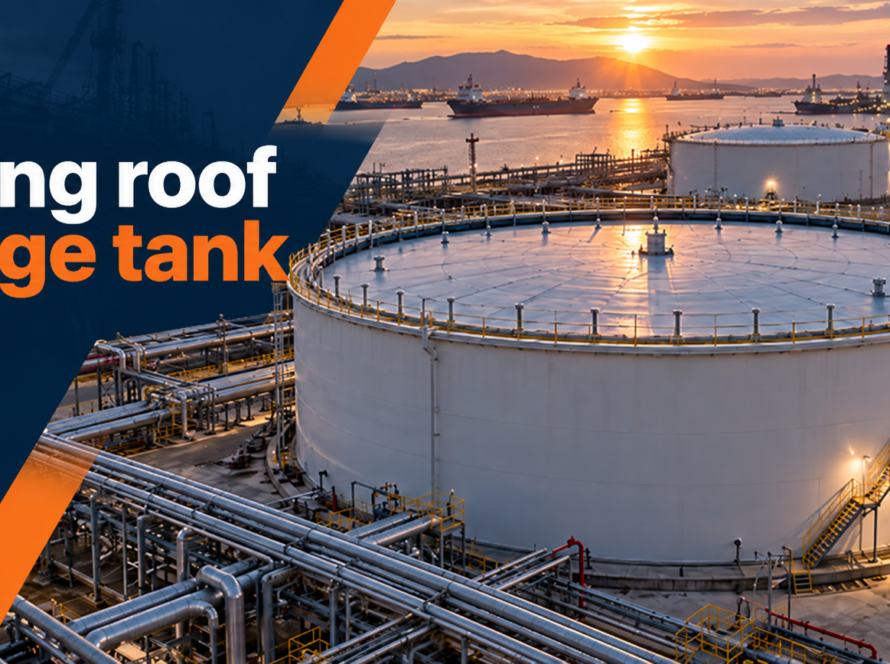


The hydro test of pressure vessel equipment is an important verification step in industrial fabrication and quality control. It helps confirm pressure-boundary integrity and identify leakage under specified test conditions. IESCON supports industrial project requirements by helping teams understand pressure testing, inspection, safety controls, and documentation needed for reliable project handover.
What Is a Hydro Test of Pressure Vessel?
A hydrostatic test, commonly called a hydro test, is a pressure test in which a vessel is filled with a suitable liquid, usually water, and pressurized according to an approved procedure.
The test helps verify that the pressure boundary can withstand the specified test conditions without unacceptable leakage or visible signs of failure.
A hydro test may be performed after fabrication and required examinations have been completed, subject to the applicable construction code and project requirements.
The test generally involves:
- Filling the vessel with the specified test liquid.
- Removing trapped air as required by the procedure.
- Raising pressure in a controlled manner.
- Holding the specified test pressure for the required period.
- Inspecting accessible areas for leakage or other unacceptable conditions.
- Recording results and obtaining the required approvals.
A successful hydrostatic test does not replace material verification, weld inspection, design review, or other required quality checks.
Why Is Hydrostatic Testing Required for Pressure Vessels?
Hydrostatic testing provides evidence that a completed pressure vessel has passed the specified pressure test. It is an important part of verifying construction quality and supporting final acceptance.
The main objectives include:
- Checking the pressure boundary for leakage.
- Identifying certain fabrication or assembly defects that become evident under test conditions.
- Verifying compliance with the applicable code and project specification.
- Supporting quality assurance and final inspection.
- Providing a documented record for the manufacturer and purchaser.
Hydrostatic testing is particularly important because visual inspection alone cannot establish that a vessel has successfully withstood its specified test pressure.
However, the test should be treated as one part of a complete quality program. It does not prove that every possible defect is absent or that the vessel will perform safely under every future operating condition.
What Are the Requirements Before a Pressure Vessel Hydro Test?
Before starting a hydro test, the project team should verify that the vessel, equipment, documentation, and work area are ready.
| Requirement | What to Verify |
| Design and test basis | Approved test pressure and procedure |
| Fabrication status | Required fabrication and assembly activities completed |
| Inspection status | Required examinations completed, except those specified after testing |
| Vessel condition | No unresolved issues that prevent safe testing |
| Test equipment | Suitable pump, calibrated pressure gauges, and required fittings |
| Test liquid | Approved liquid with acceptable quality and temperature |
| Isolation | Unintended connections and pressure sources safely isolated |
| Supports and foundations | Capable of handling the vessel and test-liquid weight |
| Safety controls | Restricted access, communication, and emergency arrangements |
| Approvals | Required inspection and witness arrangements confirmed |
A major consideration is the weight of the liquid. Filling a vessel can significantly increase its total load, so the supports and foundation must be checked for the test condition—not only the normal operating condition.
The responsible engineering team should also review the test arrangement for trapped-air risks, pressure limitations, temporary connections, and any components that cannot safely withstand the proposed test pressure.
How to Prepare a Pressure Vessel for Hydrostatic Testing
Proper preparation reduces the risk of test failure, equipment damage, and unnecessary delays.
Step 1: Review the approved documentation. Confirm the applicable construction code, approved test procedure, design basis, and specified test pressure.
Step 2: Verify inspection completion. Ensure that the required welding examinations, dimensional checks, and other pre-test inspections are complete.
Step 3: Inspect the vessel. Check the vessel’s visible condition, connections, supports, closures, and temporary test arrangements.
Step 4: Confirm isolation. Ensure that valves, piping, instruments, and connected systems are arranged according to the approved procedure. Components that cannot withstand the test conditions must be isolated or otherwise addressed through an approved engineering arrangement.
Step 5: Install suitable equipment. Confirm that the pump, pressure gauges, hoses, fittings, and pressure-control devices are appropriate for the test conditions.
Step 6: Confirm support capacity. Verify that the vessel and its supporting structure can safely accommodate the filled vessel and test arrangement.
Step 7: Establish the safety zone. Brief personnel, restrict access as required, and establish communication and emergency procedures.
Preparation should be documented in the inspection and test plan or the approved hydrostatic test checklist.
Step-by-Step Pressure Vessel Hydro Test Procedure
The actual procedure must be approved for the specific vessel and performed by competent personnel. The following sequence is a general project guide, not a substitute for the governing code or an approved test procedure.
- Verify readiness: Confirm that inspections, approvals, equipment checks, and safety arrangements are complete.
- Position the vessel: Ensure that the vessel is stable and supported for the test condition.
- Fill with the approved liquid: Introduce the liquid in accordance with the procedure and vent trapped air at designated points.
- Check the filling arrangement: Verify that the vessel is adequately filled and that vents are managed as specified.
- Increase pressure gradually: Use the approved pressure source and monitor pressure through suitable instruments.
- Reach the specified test pressure: Follow the approved sequence and do not exceed the authorized limit.
- Hold and monitor: Maintain the required conditions for the specified duration, checking for leakage or other unacceptable indications.
- Inspect the vessel: Carry out the required inspection from safe positions and according to the approved procedure.
- Depressurize in a controlled manner: Reduce pressure safely before opening connections or removing equipment.
- Drain and dry as required: Manage the test liquid and dry the vessel when specified by the service or project requirements.
- Document the result: Record the test conditions, observations, acceptance decision, and required approvals.
Personnel must never loosen fittings or attempt repairs while the vessel is pressurized. If leakage, abnormal deformation, unexpected pressure behavior, or another unsafe condition occurs, the test must be managed according to the approved stop-work and depressurization procedure.
How to Determine the Hydrostatic Test Pressure
The hydrostatic test pressure must be calculated or established according to the applicable construction code, vessel design data, and approved project procedure.
For vessels constructed under ASME BPVC Section VIII, Division 1, paragraph UG-99 addresses standard hydrostatic testing. The applicable edition and vessel-specific provisions must be checked before determining the required pressure.
The calculation may depend on factors such as:
- The vessel’s maximum allowable working pressure (MAWP).
- Allowable stress values at the relevant design and test temperatures.
- The materials used in the pressure boundary.
- The applicable code edition and any permitted alternatives.
- The liquid head and pressure variation with elevation.
- The limits of connected components and the test arrangement.
The test pressure at different elevations may not be identical because the test liquid creates a hydrostatic head. The procedure must account for the pressure at the relevant points in the vessel.
Important: Do not apply a universal multiplier to every pressure vessel. The responsible engineer must establish the correct test pressure using the governing code and approved design information. The test must also remain within the allowable limits of the vessel and test arrangement.
What Inspection and Safety Checks Are Required During the Test?
Hydrostatic testing involves stored energy and can cause serious injury if equipment fails or connections release unexpectedly. A controlled test arrangement and restricted access are essential.
The inspection and safety plan should address:
- Calibration status and suitability of pressure gauges.
- Pump and hose pressure ratings.
- Secure temporary connections.
- Vessel support and foundation capacity.
- Safe filling and venting arrangements.
- Restricted access during pressurization.
- Pressure monitoring and communication.
- Controlled depressurization.
- Spill management and safe drainage.
- Personnel authorization and emergency response.
The inspection team should look for leakage and any visible signs of distress identified by the approved procedure. Inspection must be performed from safe locations; personnel should not approach suspected failure points while the system is pressurized.
Air or gas should not be used as an informal substitute for the specified hydrostatic test. Pneumatic testing has different hazards and requires its own approved engineering controls and code provisions.
What Documents Are Required for Pressure Vessel Hydrostatic Testing?
Documentation provides traceability and demonstrates that the test was conducted under the agreed conditions.
A project may require the following records:
| Document | Purpose |
| Approved hydro test procedure | Defines the method and test requirements |
| Vessel design data | Supports verification of the test basis |
| Inspection and test plan (ITP) | Identifies inspection activities and witness points |
| Calibration certificates | Supports confidence in measurement instruments |
| Pre-test inspection records | Confirms readiness for testing |
| Material and fabrication records | Provides construction traceability |
| Welding and NDT reports | Documents required weld examination |
| Pressure test record | Captures test pressure, duration, and observations |
| Nonconformance reports | Tracks issues and corrective actions |
| Retest records, if applicable | Documents the result after corrective work |
| Final inspection release | Records the required acceptance approval |
| Manufacturer’s data book | Consolidates the required final documentation |
The RFQ or contract should identify which documents must be submitted before testing, before shipment, and before final acceptance.
What Should a Pressure Vessel Hydro Test Report Include?
A complete hydrostatic test report should allow the purchaser or inspector to identify the vessel, verify the approved test conditions, and understand the outcome.
The report commonly includes:
- Project name and identification.
- Vessel tag number, serial number, and applicable nameplate data.
- Applicable construction code and edition.
- Approved test procedure reference and revision.
- Specified test pressure and its technical basis.
- Test liquid and relevant temperature records.
- Pressure gauge identification and calibration status.
- Test date, start time, and end time.
- Pressure readings and holding period.
- Observations concerning leakage or visible distress.
- Deviations, nonconformances, and corrective actions.
- Retest details, if applicable.
- Names, roles, and signatures of responsible personnel.
- Inspector or purchaser witness approval, where required.
- Final acceptance status.
The report should distinguish between the specified test pressure and the actual recorded pressure. Any interruption, deviation, or abnormal condition should be documented and resolved according to the approved procedure.
A signed report is useful only when the supporting records are traceable and the test was performed against the correct requirements.
Common Hydro Test Problems and How to Address Them
Problems during pressure testing may result from preparation errors, equipment issues, unresolved fabrication defects, or incomplete documentation.
| Problem | Possible Cause | Recommended Response |
| Pressure cannot be maintained | Leakage, pump issue, or test-system problem | Stop as required, depressurize safely, investigate, and retest only after approval |
| Leakage at a connection | Gasket, fitting, closure, or assembly issue | Depressurize before correction |
| Unexpected pressure fluctuation | Temperature changes, instrument issues, or system behavior | Verify conditions and instrumentation under the approved procedure |
| Incomplete test records | Missing readings, signatures, or calibration information | Resolve documentation gaps before acceptance |
| Excessive vessel or support movement | Inadequate support or unanticipated loading | Stop the test safely and obtain engineering review |
| Failed inspection | A condition does not meet the applicable acceptance criteria | Raise a nonconformance and follow the approved repair and retest process |
| Corrosion concerns after testing | Inadequate drainage or drying for the service | Apply the specified cleaning, draining, and drying procedure |
Do not attempt to correct a leak or adjust a pressurized connection while the test is in progress. The vessel must be brought to a safe condition before investigation or repair.
Applicable ASME Codes and Standards for Pressure Vessel Hydro Testing
The governing construction code establishes the requirements for pressure testing, inspection, and acceptance.
Relevant ASME references may include:
- ASME BPVC Section VIII, Division 1: Includes standard hydrostatic test provisions in paragraph UG-99, subject to the applicable edition and vessel requirements.
- ASME BPVC Section VIII, Division 2: Provides alternative construction rules with its own applicable testing provisions.
- ASME BPVC Section V: Addresses Non-destructive test methods referenced by the applicable construction code.
- Project specifications and jurisdictional requirements: May establish additional documentation, inspection, and approval obligations.
The design and quality teams should confirm the correct code edition and applicable provisions for the specific vessel. The inspection and test plan should identify required witness points and acceptance responsibilities.
Pressure Vessel Hydro Test and Documentation Checklist
Use this checklist before approving a pressure vessel hydrostatic test.
- Applicable construction code and edition confirmed.
- Approved test pressure and technical basis documented.
- Approved hydrostatic test procedure available.
- Required fabrication and examinations completed.
- Vessel condition and test connections inspected.
- Test liquid and temperature requirements confirmed.
- Pump, gauges, hoses, and fittings checked.
- Calibration records verified.
- Vessel supports and foundation checked for test loading.
- Trapped-air removal and venting arrangements established.
- Isolation and safety boundaries confirmed.
- Personnel briefing and emergency arrangements completed.
- Pressure increase and holding sequence defined.
- Inspection and witness points agreed.
- Controlled depressurization and drainage planned.
- Test readings and observations recorded.
- Nonconformances and retests documented, if applicable.
- Final report reviewed and signed by authorized personnel.
- Required records included in the final manufacturing data book.
Completing the checklist helps align fabrication, quality, inspection, and procurement teams before the vessel is released for shipment or service.
Conclusion
The hydro test of pressure vessel equipment is an important verification activity that requires an approved procedure, controlled execution, qualified personnel, and traceable documentation. IESCON can support industrial project planning by helping teams coordinate pressure testing requirements, inspection records, and quality documentation for project handover.
Planning a Pressure Vessel Testing or Fabrication Project?
Contact IESCON to discuss your industrial engineering requirements and establish a clear scope for pressure testing, inspection, and documentation.
Prepare the test correctly. Record the results clearly. Support a reliable handover.
FAQs About Hydro Test of Pressure Vessels
1. What is the purpose of a hydrostatic test on a pressure vessel?
A hydrostatic test verifies that a pressure vessel passes its specified liquid-pressure test without unacceptable leakage or other indications of failure, according to the applicable code and approved procedure.
2. How is hydro test pressure determined for a pressure vessel?
The responsible engineer establishes it using the applicable construction code, vessel design data, material properties, and approved test procedure. A universal multiplier should not be applied to every vessel.
3. When should a pressure vessel hydro test be performed?
For vessels subject to standard ASME Section VIII hydrostatic testing, it is generally performed after required fabrication and examinations are complete, subject to the applicable code provisions and approved procedure.
4. What should a pressure vessel hydro test report include?
It should identify the vessel, test procedure, specified and actual pressures, test liquid, relevant temperature, holding period, instruments, observations, deviations, acceptance result, and required approvals.
5. Is hydrostatic testing safer than pneumatic testing?
Hydrostatic testing generally involves less stored energy than pneumatic testing because liquids are far less compressible than gases. However, hydrostatic testing still presents serious hazards and requires proper engineering controls and an approved procedure.